
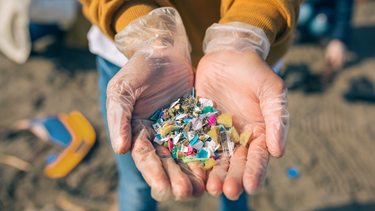
Microplastics have become an increasingly common part of conversations about environmental health. These tiny pieces of plastic have been found in oceans, rivers, soil, wildlife, and even some of the most remote places on Earth.
While the subject can feel overwhelming, understanding where microplastics come from and how they move through our local environments can help us make more thoughtful choices.
One source that is often overlooked? The textiles we wear, wash, and bring into our homes.
From clothing and blankets to rugs and household fabrics, many everyday textiles are made from synthetic materials. Over time, these materials can shed tiny plastic fibers into the environment. Choosing natural fibers, including wool, is one way to reduce our reliance on materials that may persist long after their useful life has ended.
At Sonoma Wool Company, we believe that understanding where our materials come from is an important part of appreciating where they eventually go.
What Are Microplastics?
Microplastics are very small pieces of plastic, generally defined as particles measuring less than five millimeters in size.
Some microplastics begin as larger plastic products that gradually break apart through sunlight, friction, weather, and everyday use. Others are released in much smaller forms from the beginning, including tiny synthetic fibers shed from textiles.
Polyester, nylon, acrylic, and other synthetic fabrics are made from plastic-based materials. As these fabrics are worn, washed, and eventually discarded, they can release microscopic fibers. Because these fibers are so small, they can travel through wastewater systems, waterways, soil, and other parts of the environment.
How Do Synthetic Fibers Reach Local Ecosystems?
The journey of a single synthetic fiber may begin at home.
Everyday activities—particularly washing synthetic textiles—can release tiny fibers into wastewater. While wastewater treatment systems can capture some of these particles, not all microfibers are necessarily removed before water continues through the broader environment.
Synthetic fibers can also be released through regular wear and tear. Clothing, upholstery, carpeting, and other textile products gradually experience friction over time. As materials shed, tiny fibers can move through indoor spaces and eventually make their way outdoors.
Once released, microplastics do not simply disappear. They can accumulate in waterways and soil, be carried by wind and rain, and interact with plants and wildlife. Researchers are continuing to study exactly how microplastics move through ecosystems and what their long-term effects may be.
Why Local Environments Matter
When we think about plastic pollution, it is easy to picture distant oceans or enormous floating debris fields.
But environmental systems are deeply connected, and the issue can begin much closer to home. Rainfall carries particles into storm drains. Rivers and streams connect to larger waterways. Wastewater treatment facilities serve individual communities. Soil, air, wildlife, and water are all part of the same local ecosystem.
That means the everyday choices made in our homes can have a wider footprint than we may realize. Yet, this is not about perfection. Synthetic materials are deeply woven into modern life, and there is no single purchase or lifestyle change that will solve the problem of microplastic pollution.
Instead, it is about becoming more aware of the materials we choose, and considering their full life cycle.
Natural Fibers Offer a Different Path
Natural fibers are not all created equal, and every material comes with its own environmental considerations. How a fiber is grown, raised, processed, transported, cared for, and eventually disposed of all contribute to its overall impact.
But there is an important distinction between natural fibers and synthetic fibers: natural fibers are not plastics. Wool is a natural protein fiber grown by sheep. Unlike synthetic materials such as polyester and acrylic, wool fibers do not introduce plastic microfibers into the environment.
Wool also has another important advantage: it is biodegradable under appropriate environmental conditions. That does not mean wool should be treated as disposable. In fact, one of wool’s greatest strengths is its potential for longevity. Wool is naturally resilient, and well-made wool products can often be cared for and used for years.
The longer we use the things we already own, the more value we can get from the resources that went into creating them.
Small Choices Can Add Up
Addressing microplastic pollution can feel like an enormous challenge, but meaningful change does not have to begin with an all-or-nothing approach.
A few thoughtful steps can make a difference over time:
- Choose natural fibers when they make sense
- Buy with longevity in mind
- Care for what you own
- Check the label and be curious about materials
A More Thoughtful Relationship With What We Use
At Sonoma Wool Company, our appreciation for wool begins with the understanding that it comes from a living system.
Wool connects us to sheep, land, seasons, and generations of knowledge about working with natural materials. It reminds us that the things we use every day have a beginning, and, eventually, an end.
As we continue learning more about microplastics and their presence in our environment, the conversation around textiles becomes increasingly important. No single material is a perfect environmental solution. But choosing durable, natural materials when possible can be one meaningful way to reduce our dependence on plastic-based fibers.
The goal is not to replace everything overnight. It is simply to become a little more thoughtful about what we bring into our homes, what we wear against our skin, and what those materials may leave behind.
Because sometimes, caring for the environment begins with something as simple as paying closer attention to the fibers in our everyday lives.
